
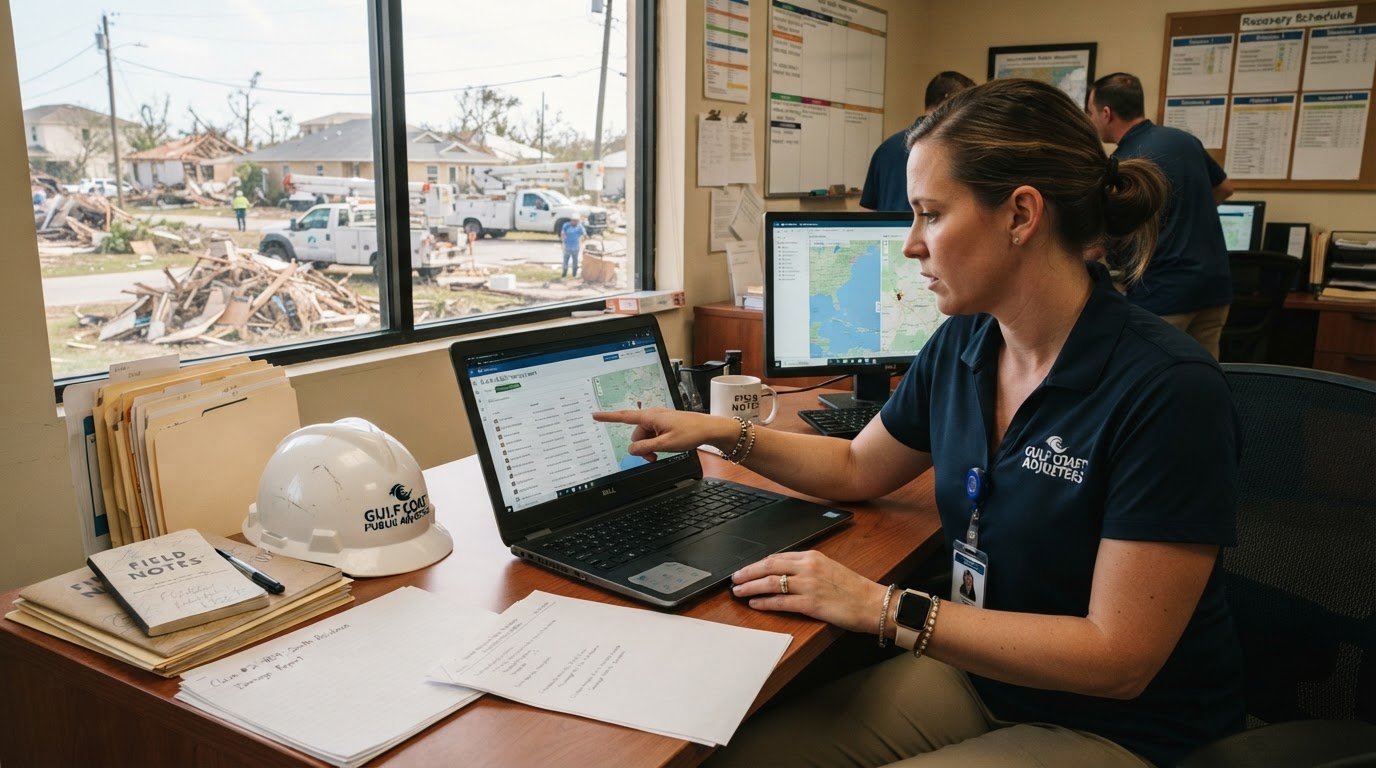
The marketing tools public adjusters need in 2026: CRM, speed-to-lead texting, call tracking, local SEO, reviews, ads, and referral tracking, connected into one system.
Public adjusting has a strange marketing problem. For months, almost nobody is searching for you. Then a storm comes through, every homeowner in three parishes needs help at once, and the firms that win are the ones that answer first, look credible, and follow up until the contract is signed.
Most public adjusters don't lose claims because they're bad at adjusting. They lose them because a call went to voicemail, a web form sat in an inbox overnight, or the homeowner googled them and found a thin website with four reviews.
This guide covers the marketing tools public adjusters actually need, what each one does, and how to connect them so your marketing works the same way your best adjuster does: fast, organized, and persistent.
The short answer
The tools matter less than how they connect. A CRM that doesn't receive your web leads, or ads that aren't tied to call tracking, leave you guessing.
| Tool | What it does for a public adjuster | Priority |
|---|---|---|
| CRM with a claims pipeline | Tracks every lead from first call to signed contract | Must-have |
| Missed-call text back + speed-to-lead automation | Responds in seconds when you can't pick up | Must-have |
| Website with a claim intake form | Turns searches and referrals into qualified leads | Must-have |
| Google Business Profile | Shows up in 'public adjuster near me' and map results | Must-have |
| Review generation | Builds the trust homeowners check before they call | Must-have |
| Call tracking | Shows which ads, pages, and referrals produce calls | High |
| Email and SMS nurture | Keeps undecided homeowners warm for weeks | High |
| Referral partner tracking | Credits roofers, contractors, and attorneys who send work | High |
| Paid search and social ads | Captures demand during and after storm events | Situational |
| Reporting dashboard | Shows cost per lead and cost per signed claim | High |
1. A CRM built around your claims pipeline
If you only add one tool this year, make it a CRM set up for how public adjusting really works.
A generic contact list isn't enough. Your CRM should have a pipeline with stages that match your process, for example: New lead, Contacted, Inspection scheduled, Inspection complete, Contract sent, Contract signed, Claim filed / in negotiation, Settled.
- Every lead source flows in automatically: web forms, calls, texts, Facebook leads, and referral partner submissions.
- Assignment rules so leads route to the right adjuster by territory or claim type.
- Tasks and reminders so no lead sits untouched.
- Document and e-signature support for contracts, or an integration with the tool you already use.
- Mobile access, because your adjusters live in their trucks.
Common options: GoHighLevel, HubSpot, and Salesforce are all used by service businesses. GoHighLevel is popular with smaller firms because it bundles CRM, texting, email, forms, calendars, and reviews in one platform. Many public adjusters also run dedicated claims management software for the claim itself. That's fine. The marketing CRM handles the lead until the contract is signed, then hands off.
2. Speed-to-lead and missed-call text back
After a storm, a homeowner may call three or four public adjusters in an hour. The one who responds first often gets the inspection.
Speed-to-lead tools to set up:
- Missed-call text back. If nobody answers, the caller gets a text within seconds: "Sorry we missed you. This is [Firm]. Are you calling about storm or water damage to your home or business? Reply here and an adjuster will reach out shortly."
- Instant form response. When someone fills out your claim form, they get a text and email right away, and your team gets an alert.
- Online booking. Let homeowners pick an inspection time from a calendar instead of playing phone tag.
- After-hours coverage. An answering service or an AI-assisted phone and chat assistant can capture details at 11 p.m. so your team can call back first thing.
A note on compliance: Texting leads requires consent and registered business texting (A2P 10DLC) through your provider. Public adjusters also face state-specific rules on solicitation, timing, and advertising. Check your state's insurance department rules and talk to your attorney before you launch outbound campaigns. Responding to people who contacted you is very different from unsolicited outreach.
3. A website built to convert, not just exist
Homeowners usually find you one of two ways: a referral, or a search. Either way, they check your website before they call. Your site has one job: convince a stressed homeowner that you're licensed, legitimate, and worth calling right now.
Your public adjuster website needs:
- Click-to-call phone number at the top of every page on mobile.
- A short claim intake form: name, phone, property address, type of damage, date of loss, and whether they've already filed with their carrier.
- License information for every state you work in.
- Clear explanation of how you're paid, including your fee structure as allowed in your state. Hiding it hurts trust.
- Pages for each claim type: hurricane and wind, water and plumbing leaks, fire and smoke, hail, roof, commercial property, denied or underpaid claims.
- Location pages for the areas you serve, written with real local detail, not the same page with the city name swapped.
- Reviews and credentials near every call to action.
- Storm-ready landing pages: Build a page template you can launch within hours of a named storm, with event-specific information, what homeowners should document, and how to reach you. Pages built ahead of time beat pages built in a panic.
4. Google Business Profile and local SEO
When someone searches "public adjuster near me" or "hurricane claim help Slidell," Google's map results usually show up first. Your Google Business Profile is free and often the most important listing you have.
Set it up right:
- Choose the most accurate primary category for your firm, and add secondary categories that fit.
- Use your real business address and keep your name, address, and phone (NAP) the same everywhere online.
- Add your service areas, hours, and photos of your team and real inspections (with permission).
- Post updates after storms with helpful information.
- Answer questions in the Q&A section yourself.
Local SEO beyond the map: Publish helpful content that answers the questions homeowners ask: "Should I hire a public adjuster?", "What does a public adjuster charge?", "What to do after hurricane damage." These pages build trust and help you show up in Google and in AI answers from tools like ChatGPT and Google's AI Overviews.
5. Review generation
Before a homeowner trusts you with the biggest insurance claim of their life, they read your reviews. A firm with a handful of reviews competes poorly against one with a steady stream of recent ones.
How to build reviews without being pushy:
- Ask at the right moment: right after a settlement check arrives, not on day one.
- Automate the request by text and email from your CRM when a claim moves to "Settled."
- Make it one tap: send the direct link to your Google review form.
- Respond to every review, good and bad, professionally.
- Never offer payment or incentives for reviews, and follow Google's review policies.
6. Call tracking
Phone calls are where most public adjuster business starts. Without call tracking, you can't tell whether a signed claim came from Google Ads, a Facebook post, a yard sign, or a roofer referral.
Call tracking tools (CallRail and the built-in tracking in platforms like GoHighLevel are common choices) give each source its own number, record calls for training, and send call data into your CRM. Then your reports can show which channels produce signed claims, not just rings.
7. Email and SMS nurture
Not every homeowner signs the first week. Some are still waiting on their carrier's offer. Some don't know a public adjuster is an option. A nurture sequence keeps you in front of them without manual work.
Sequences worth building:
- New lead, not yet inspected: What a public adjuster does, how fees work, what to document, a reminder to book.
- Inspection done, contract not signed: Answer common objections, share a relevant review, offer a call.
- Carrier offer received: "Got an offer that seems low? We can review it."
- Past clients: Seasonal check-ins before hurricane season and a referral request.
8. Referral partner tracking
Roofers, restoration companies, contractors, mortgage brokers, and attorneys can be some of your best lead sources. Treat those relationships like a pipeline too.
- Give each partner a simple way to send a lead: a dedicated form, link, or phone number.
- Tag every referral by partner in your CRM.
- Send partners updates so they know you took care of their customer.
- Review partner volume quarterly so you know who to invest time in.
- Check your state's rules on referral fees and compensation before you formalize any arrangement.
9. Paid ads: Google, Meta, and storm response
Paid ads aren't always necessary, but they can help you capture demand when it spikes.
- Google Search ads reach homeowners actively searching for claim help. Tight keyword lists and negative keywords matter. You don't want to pay for "insurance adjuster jobs."
- Meta (Facebook and Instagram) ads work for awareness in affected areas, retargeting website visitors, and promoting helpful post-storm content.
- Storm response playbook: Prepare ad copy, landing pages, and geographic targets ahead of hurricane season, so you can launch quickly when an event hits.
Advertising for public adjusters can be regulated by your state and by ad platforms. Keep claims accurate, include required license information, and never promise a specific settlement amount.
10. Reporting that shows cost per signed claim
The last tool ties everything together. A simple dashboard should answer:
- How many leads came in this month, and from where?
- How fast did we respond?
- How many inspections did we schedule and complete?
- How many contracts were signed, and from which sources?
- What did each signed claim cost to acquire?
When you can see that, you stop arguing about which marketing "works" and start putting money where signed claims come from.
How the tools work together
Here's what a connected system looks like in practice:
- A homeowner in Gulfport searches for help after a storm and finds your Google Business Profile.
- They call a tracked number. Nobody answers, so they get an instant text back.
- They reply, and the lead lands in your CRM tagged "Google Business Profile."
- An adjuster gets an alert, calls within minutes, and books an inspection on the calendar.
- After the inspection, an automated follow-up answers common questions until the contract is signed.
- When the claim settles, the CRM sends a review request.
- Your dashboard shows one more signed claim from Google Business Profile, with its cost.
None of these tools is complicated on its own. The value is in connecting them so leads don't slip through the gaps between systems.
Where to start if you're doing it yourself
If you're a solo adjuster or small firm, start in this order:
- Clean up your Google Business Profile and ask your last 10 happy clients for reviews.
- Set up a CRM with missed-call text back and a basic claims pipeline.
- Fix your website's mobile experience: click-to-call and a short intake form.
- Add call tracking before you spend a dollar on ads.
- Build one nurture sequence for leads who haven't booked an inspection.
- Then layer on ads, referral tracking, and storm playbooks once the basics are running.
Losing claims to slow follow-up or scattered tools?
Schedule a Growth Strategy Call and we'll map out the marketing system your firm needs before the next storm season. Four Pillar Marketing is headquartered at 116 E Canal St, Picayune, MS 39466 — call 1-888-426-0759 or book a call today.
Let's map your 90-day growth plan
Book a free 30-minute strategy call. Walk away with a customized roadmap — whether you work with us or not.
Book Strategy Call